
TECHNICAL GUIDE
ATECC608B‑MAHDA‑T UDFN‑8 Crypto Co‑Processor Security IC
Use the article below together with the latest manufacturer documentation and your application requirements.
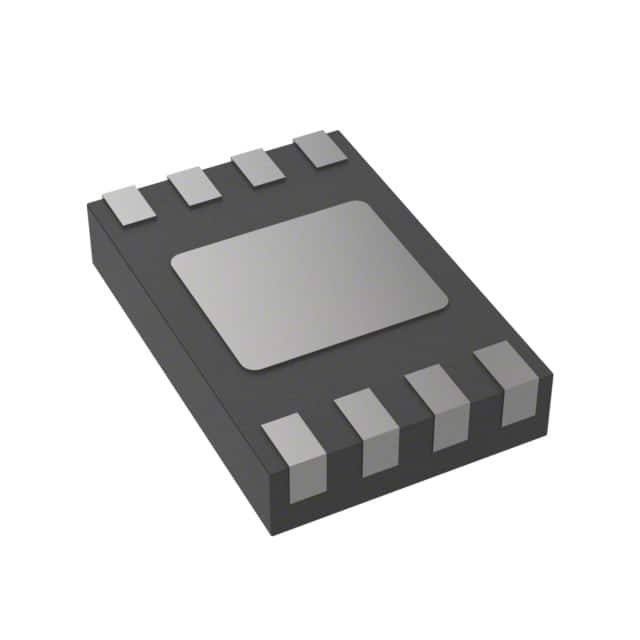
The ATECC608B‑MAHDA‑T is a high‑performance hardware crypto co‑processor built as a dedicated secure element for modern embedded and IoT security requirements. Packaged in compact 8‑pad UDFN‑8 surface‑mount housing, this miniature device fits tightly on dense PCB layouts and supports standard SMT tape‑and‑reel assembly for high‑volume product manufacturing.
Integrated multi‑algorithm hardware accelerators deliver both asymmetric and symmetric cryptographic operations on‑chip, including NIST P‑256 ECC for ECDSA signing‑verification and ECDH key agreement, AES‑128 encryption‑decryption with GCM support, as well as SHA‑256 and HMAC hash computation. Native support for PRF and HKDF functions accelerates TLS 1.2 and TLS 1.3 handshakes, reducing computing burden for resource‑limited host microcontrollers.
Up to 16 protected memory slots are available for secure storage of private keys, digital certificates and critical configuration data. Access permissions can be individually defined and locked to prevent unauthorized modification or extraction. Private keys never leave the chip interior; all signing and key negotiation processes complete inside isolated crypto circuits to resist side‑channel attacks and software exploits. Each component ships with factory‑burned immutable 72‑bit unique serial number for unchangeable hardware identity marking. An internal FIPS‑compliant true random number generator produces high‑entropy random values for authentication challenges and ephemeral key generation. Dual high‑endurance monotonic counters help implement anti‑replay protection for security workflows.
This secure element provides dual communication options: 1MHz I²C interface and single‑wire interface, enabling flexible connection with most mainstream MCUs. Supply voltage covers 2.0V‑5.5V while IO level supports 1.8V‑5.5V, matching multi‑voltage embedded designs. Sleep current falls below 150nA, making it well‑suited for battery‑powered low‑power nodes to preserve energy consumption. Operating temperature spans ‑40°C to +85°C for industrial‑grade reliability under variable working conditions, and the component meets RoHS lead‑free specifications for global market deployment.
Rich built‑in security functions cover full secure boot workflow with firmware signature validation, OTA update integrity check, encrypted message transmission and session key management. It serves as a hardware trust anchor widely adopted in IoT endpoint authentication, smart home hardware, industrial network terminals, accessory anti‑cloning, consumable validation and embedded equipment IP protection. Offloading heavy cryptography tasks from main MCU greatly enhances system security without demanding excessive host computing resources.
Integrated multi‑algorithm hardware accelerators deliver both asymmetric and symmetric cryptographic operations on‑chip, including NIST P‑256 ECC for ECDSA signing‑verification and ECDH key agreement, AES‑128 encryption‑decryption with GCM support, as well as SHA‑256 and HMAC hash computation. Native support for PRF and HKDF functions accelerates TLS 1.2 and TLS 1.3 handshakes, reducing computing burden for resource‑limited host microcontrollers.
Up to 16 protected memory slots are available for secure storage of private keys, digital certificates and critical configuration data. Access permissions can be individually defined and locked to prevent unauthorized modification or extraction. Private keys never leave the chip interior; all signing and key negotiation processes complete inside isolated crypto circuits to resist side‑channel attacks and software exploits. Each component ships with factory‑burned immutable 72‑bit unique serial number for unchangeable hardware identity marking. An internal FIPS‑compliant true random number generator produces high‑entropy random values for authentication challenges and ephemeral key generation. Dual high‑endurance monotonic counters help implement anti‑replay protection for security workflows.
This secure element provides dual communication options: 1MHz I²C interface and single‑wire interface, enabling flexible connection with most mainstream MCUs. Supply voltage covers 2.0V‑5.5V while IO level supports 1.8V‑5.5V, matching multi‑voltage embedded designs. Sleep current falls below 150nA, making it well‑suited for battery‑powered low‑power nodes to preserve energy consumption. Operating temperature spans ‑40°C to +85°C for industrial‑grade reliability under variable working conditions, and the component meets RoHS lead‑free specifications for global market deployment.
Rich built‑in security functions cover full secure boot workflow with firmware signature validation, OTA update integrity check, encrypted message transmission and session key management. It serves as a hardware trust anchor widely adopted in IoT endpoint authentication, smart home hardware, industrial network terminals, accessory anti‑cloning, consumable validation and embedded equipment IP protection. Offloading heavy cryptography tasks from main MCU greatly enhances system security without demanding excessive host computing resources.


