What Is an LR44 Battery?
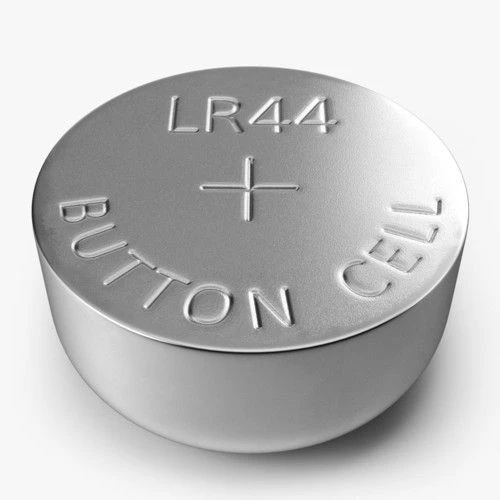
The LR44 battery is a small 1.5V alkaline button cell widely used in compact electronic devices. It has a round, flat shape and is often described as an LR44 coin battery, LR44 coin cell battery, or button battery. Its typical dimensions are about 11.6 mm in diameter and 5.4 mm in height.
Although the LR44 looks simple, choosing a replacement can be confusing. The same physical battery size may be sold under names such as LR44, AG13, A76, 357, SR44, and other manufacturer-specific codes. Some of these batteries have almost identical dimensions but use different chemical systems, which can affect voltage stability, working life, and performance in sensitive equipment.
The most important point is that an LR44 1.5V battery is normally an alkaline manganese battery. It is not normally a lithium battery. This matters because people searching for terms such as LR44 lithium battery or lithium battery LR44 equivalent may assume that any button-shaped lithium battery can replace an LR44. In most cases, that is not true.
A good LR44 replacement should be selected by checking three things: physical size, voltage, and battery chemistry. Looking only at the diameter of the cell is not enough.
/upload/202609/27/202609271931121100.webp
LR44 Battery Quick Specifications
| Specification | Typical LR44 Value |
|---|---|
| Battery type | Alkaline button cell |
| Nominal voltage | 1.5V |
| Diameter | About 11.6 mm |
| Height | About 5.4 mm |
| Common equivalent names | AG13, A76 and some manufacturer-specific equivalents |
| Similar silver oxide size | SR44, 357/303 |
| Common applications | Toys, calculators, small clocks, measuring tools, lights and compact electronics |
What Is the LR44 Battery Voltage?
The standard LR44 battery voltage is 1.5 volts. A fresh alkaline LR44 may measure slightly above its nominal rating when tested without a significant load, but 1.5V is the voltage used when identifying the battery type.
Voltage is especially important when replacing a button cell. Two batteries may fit into the same battery holder but operate at very different voltages. Installing a battery with a much higher voltage can cause incorrect operation and may damage the device.
This is one reason an LR44 should not automatically be replaced with a lithium coin cell. Many common lithium coin batteries operate at approximately 3V, which is about twice the nominal voltage of an LR44.
What Is LR44 Watch Battery Voltage?
The nominal LR44 watch battery voltage is also 1.5V because the voltage is determined by the battery chemistry, not by the device using it. However, not every watch designed for an 11.6 mm button cell originally uses an alkaline LR44.
Many watches and precision devices use an SR44 or 357 silver oxide battery instead. These cells have approximately the same physical dimensions as LR44 but have a nominal voltage of about 1.55V and generally maintain their operating voltage more steadily during discharge.
For this reason, when replacing a watch battery, it is better to check the number printed on the original cell rather than choosing a replacement only because it fits the battery compartment.
What Is the Best LR44 Battery Equivalent?
The phrase LR44 battery equivalent can mean two different things. Some users want another name for exactly the same alkaline battery type, while others want a battery that physically fits and can operate the same device.
Common names associated with the LR44 size include AG13 and A76. The SR44 and 357/303 are also commonly discussed as alternatives because they use the same general physical size, although they normally use silver oxide chemistry rather than alkaline chemistry.
When searching for a battery LR44 equivalent or an equivalent battery LR44, do not assume that every number listed by an online seller represents identical chemistry. Some cross-reference charts combine alkaline and silver oxide batteries because the dimensions are compatible.
This does not necessarily make the chart wrong. It simply means that "equivalent" may refer to physical and electrical compatibility rather than identical internal construction.
Common LR44 Equivalent Names
| Battery Code | Typical Chemistry | Nominal Voltage | Relationship to LR44 |
|---|---|---|---|
| LR44 | Alkaline | 1.5V | Original reference type |
| AG13 | Usually alkaline | 1.5V | Common LR44 equivalent marking |
| A76 | Alkaline | 1.5V | Common branded replacement |
| SR44 | Silver oxide | 1.55V | Same general size, different chemistry |
| 357/303 | Silver oxide | 1.55V | Common premium replacement for compatible devices |
What Is an LR44 Button Battery Equivalent?
An LR44 button battery equivalent is usually another button cell with the same physical dimensions and a suitable operating voltage. AG13 and A76 are among the most common alkaline alternatives. SR44 and 357 batteries may also be used in many devices when silver oxide chemistry is acceptable.
What Is an LR44 Cell Battery Equivalent?
The term LR44 cell battery equivalent usually refers to the same cross-reference group. The word "cell" does not change the electrical specification. LR44, AG13, and A76 are commonly grouped together, while SR44 and 357 are same-size silver oxide alternatives.
LR44 Battery vs 357: What Is the Difference?
The comparison between LR44 battery vs 357 is one of the most common sources of confusion because these batteries are very close in physical size but are not chemically identical.
An LR44 normally uses alkaline manganese chemistry and has a nominal voltage of 1.5V. A 357 battery normally uses silver oxide chemistry and has a nominal voltage of approximately 1.55V.
The important difference between LR44 and 357 battery types is therefore not simply the extra 0.05V. Their discharge behavior is also different.
Alkaline cells gradually lose voltage as they discharge. Silver oxide cells tend to maintain a more stable working voltage for a larger part of their service life. In equipment that depends on steady voltage for accurate readings or predictable operation, this difference can matter more than the small difference in nominal voltage.
| Feature | LR44 | 357 |
|---|---|---|
| Chemistry | Alkaline | Silver oxide |
| Nominal voltage | 1.5V | About 1.55V |
| Diameter | About 11.6 mm | About 11.6 mm |
| Height | About 5.4 mm | About 5.4 mm |
| Voltage during use | Gradually declines | Usually more stable |
| Typical cost | Usually lower | Usually higher |
For simple toys, lights, and similar electronics, an alkaline LR44 may be completely suitable. For a precision instrument or a device originally designed for a 357 or SR44 battery, using the original chemistry is usually the safer approach.
SR44 Battery vs LR44
The SR44 battery vs LR44 comparison is similar to the 357 comparison because SR44 is a silver oxide button cell.
LR44 and SR44 are approximately the same physical size. The main difference is chemistry. LR44 uses alkaline chemistry, while SR44 uses silver oxide chemistry.
The letter codes actually give useful information. In common IEC-style battery naming, "LR" identifies an alkaline chemistry and "SR" identifies silver oxide chemistry. Therefore, LR44 and SR44 should not automatically be treated as chemically identical just because the number 44 is the same.
For many low-power devices, either battery may operate the product. However, silver oxide batteries are often preferred when stable voltage is important. Always follow the equipment manufacturer's specified battery type when accuracy, safety, or calibration matters.
LR44 Battery vs AG13
For most everyday replacement situations, LR44 battery vs AG13 is a much simpler comparison. AG13 is commonly used as another commercial designation for an alkaline button battery in the same size class as LR44.
Both are normally around 1.5V and about 11.6 mm in diameter by 5.4 mm high. This is why AG13 frequently appears on lists of LR44-compatible batteries.
If a product requires an LR44 and a reputable battery manufacturer lists its AG13 product as compatible with LR44, it is generally a straightforward replacement. Still, checking the original device specification is better than relying only on a marketplace listing.
LR44 Battery vs CR2032
An LR44 battery vs CR2032 comparison shows why shape alone cannot determine compatibility.
Both are round button or coin-style batteries, but they are very different products. An LR44 is approximately 11.6 mm in diameter, 5.4 mm high, and operates at 1.5V. A CR2032 is about 20 mm in diameter, 3.2 mm high, and operates at 3V.
| Feature | LR44 | CR2032 |
|---|---|---|
| Typical chemistry | Alkaline | Lithium |
| Nominal voltage | 1.5V | 3V |
| Diameter | About 11.6 mm | About 20 mm |
| Height | About 5.4 mm | About 3.2 mm |
| Directly interchangeable? | No | |
A CR2032 should therefore not be treated as an LR44 replacement. It does not have the same dimensions, voltage, or chemistry.
Is There an LR44 Lithium Battery?
Searches for LR44 lithium battery are common, but the standard LR44 designation normally refers to an alkaline battery rather than lithium chemistry.
This creates confusion because many people use "coin battery," "button battery," and "lithium battery" as if they mean the same thing. They do not.
Coin and button describe a physical shape. Lithium, alkaline, and silver oxide describe chemical systems.
A button-shaped cell can therefore be alkaline, silver oxide, lithium, zinc-air, or another chemistry depending on its designation.
Is There a Lithium Battery LR44 Equivalent?
There is generally no universal lithium battery LR44 equivalent that should be treated as a direct drop-in replacement for every LR44 device.
Most familiar lithium coin cells, such as CR-series batteries, operate at approximately 3V. An LR44 device is normally designed around a 1.5V cell. Using a 3V lithium battery in equipment intended for 1.5V can expose the circuit to excessive voltage.
If your goal is longer service life rather than specifically using lithium chemistry, an SR44 or 357 silver oxide battery may be a more useful option to investigate because it has the same general dimensions and a voltage much closer to LR44.
The final decision should always depend on what the device manufacturer allows.
Difference Between LR41 and LR44 Battery
The difference between LR41 and LR44 battery types is mainly size and capacity. Both are commonly 1.5V alkaline button cells, but the LR41 is much smaller.
An LR41 is approximately 7.9 mm in diameter and 3.6 mm high. An LR44 is approximately 11.6 mm in diameter and 5.4 mm high.
| Specification | LR41 | LR44 |
|---|---|---|
| Nominal voltage | 1.5V | 1.5V |
| Diameter | About 7.9 mm | About 11.6 mm |
| Height | About 3.6 mm | About 5.4 mm |
| Direct replacement? | No | |
Even though both batteries operate at the same nominal voltage, they cannot normally replace one another because the dimensions are different. A correct replacement must fit the battery contacts firmly and safely.
What About a 337 Battery?
A 337 battery should not be confused with an LR44 or 357 simply because all three may appear in watch and button-cell discussions.
The 337 is a much smaller silver oxide battery. It is only around 4.8 mm in diameter and about 1.65 mm high, while LR44 and 357 cells are approximately 11.6 mm in diameter and 5.4 mm high.
Therefore, a 337 is not a physical replacement for LR44. If you are actually researching the difference between LR44 and 357 battery types, the important comparison is alkaline LR44 versus same-size silver oxide 357, not LR44 versus 337.
What Batteries Are LR44 Compatible?
When people search for an LR44 battery compatible option, they are usually trying to determine whether a battery will fit their device and operate it correctly.
Compatibility should be checked in this order:
- Size: The replacement must physically fit the battery holder.
- Voltage: The replacement voltage should match the device requirement.
- Chemistry: Different chemistries can have different discharge curves and service characteristics.
- Polarity: The battery must be installed in the correct direction.
- Device requirements: Precision equipment may require a specific chemistry even when another battery physically fits.
AG13 and A76 are among the most common alkaline designations associated with LR44. SR44 and 357/303 are commonly used same-size silver oxide alternatives where permitted.
How to Choose an LR44 Battery Replacement
Choosing an LR44 battery replacement becomes much easier if you ignore the long list of marketing names for a moment and focus on basic electrical specifications.
1. Check the Original Battery
Remove the old battery and read every code printed on it. If it clearly says LR44, replacing it with another quality LR44 is the simplest option.
2. Check the Device Manual
The manual may list several acceptable battery codes. This is more reliable than guessing from size or using an unknown online conversion chart.
3. Match the Voltage
A replacement battery for LR44 should normally operate around the same 1.5V range unless the manufacturer specifically approves another chemistry.
4. Match the Dimensions
Button cells that differ by only a few millimeters may still look similar in a product image. Always check diameter and height.
5. Consider the Device Type
A simple flashing toy and a precision measuring instrument do not have the same power requirements. For a simple low-cost product, an alkaline LR44 may be ideal. For equipment that benefits from a stable discharge voltage, a compatible silver oxide option may provide more predictable performance.
What Is an LR44 Battery Used For?
If you are wondering what is an LR44 battery used for, the answer is mostly small portable electronics that need a compact 1.5V power source.
Common LR44 battery uses include:
- Electronic toys
- Small calculators
- Compact clocks
- Laser pointers
- LED lights
- Digital measuring tools
- Electronic thermometers designed for this battery type
- Small remote controls
- Novelty electronics
- Some watches and small timing devices
However, seeing a round battery compartment does not mean the device uses LR44. Many products use LR41, SR626, CR2032, CR2025, or other button and coin cell sizes. Always check the number printed on the old battery or inside the battery compartment.
LR44 Battery Price: What Affects the Cost?
The LR44 battery price can vary significantly depending on brand, chemistry, package size, manufacturing quality, shelf life, and where the batteries are purchased.
Generic alkaline LR44 batteries are usually inexpensive, especially when purchased in multi-packs. Branded batteries may cost more but often provide clearer specifications, more consistent manufacturing, and better packaging.
Silver oxide alternatives such as 357 or SR44 batteries normally cost more than basic alkaline LR44 cells because they use a different chemistry and are often chosen for devices that benefit from stable voltage.
Instead of choosing only by the lowest price per cell, consider the total cost of ownership. If replacing a cheap battery requires opening a difficult enclosure every few months, paying more for a suitable higher-performance battery may be worthwhile.
On the other hand, for inexpensive toys or devices that are only used occasionally, buying a premium silver oxide battery may provide little practical benefit.
LR44 Battery Pack or Single Battery?
An LR44 battery pack can be useful if several household devices use the same battery or if a product requires multiple LR44 cells at once.
Common packages may contain two, three, four, ten, or more cells. An LR44 battery 3 pack is convenient for equipment that uses three batteries or for keeping a small number of replacements available.
However, buying the largest pack is not always the best choice. Consider how often you actually use LR44 batteries. Batteries stored for years may eventually become less useful, and loose button cells require careful storage.
For most users, the best pack size is the smallest package that covers current devices plus a reasonable number of spares.
LR44, AG13, 357 and SR44: Which One Should You Choose?
There is no single answer for every device because these names do not always describe identical chemistry.
If the equipment specifically calls for LR44, using a reputable LR44 or approved alkaline equivalent such as A76 or AG13 is the most direct solution.
If the device manual allows SR44 or 357, silver oxide may provide a flatter discharge curve and more stable operating voltage. This can be useful for watches, measuring instruments, and other electronics where predictable voltage is valuable.
The most useful rule is simple: match the original specification first, then consider an equivalent. Do not start with a list of replacement numbers and assume every battery on the list is identical.
Why Two LR44-Compatible Batteries Can Perform Differently
One useful way to understand LR44 replacement batteries is to separate fit from performance.
Two batteries may fit the same holder perfectly. They may even start the device successfully. But that does not guarantee that they will provide the same operating time or voltage behavior.
An alkaline LR44 gradually loses voltage as it discharges. A silver oxide SR44 or 357 generally maintains a flatter voltage curve before reaching the end of its useful life.
In a simple light or toy, this may only mean that the device slowly becomes dimmer or weaker. In a measuring device, however, stable voltage can sometimes be more important.
This is why battery cross-reference charts should be treated as a starting point rather than a complete engineering specification.
Common Mistakes When Replacing an LR44 Battery
Choosing by Shape Alone
CR2032, LR44, LR41, and many other batteries are round. They are not interchangeable simply because they share the same general shape.
Assuming Every Equivalent Has the Same Chemistry
An LR44 and 357 can fit the same holder, but one is normally alkaline and the other silver oxide.
Using a 3V Lithium Cell in Place of a 1.5V LR44
A typical lithium CR-series battery has a much higher nominal voltage. Never assume that a lithium battery is an upgrade for an alkaline LR44.
Mixing Old and New Batteries
If a device uses several LR44 cells, replace the set together when possible. Mixing batteries with very different states of charge can lead to uneven performance.
Ignoring Polarity
Button cells have clearly defined positive and negative sides. Follow the polarity marks inside the battery compartment.
How to Store LR44 Batteries Safely
Store unused LR44 batteries in their original packaging in a cool, dry location. Avoid keeping loose button cells together with metal objects such as keys, screws, or coins because conductive materials can create an electrical connection between the battery terminals.
Button batteries are small enough to be swallowed and can cause serious injury. Keep new and used batteries away from children and pets. If a button battery is swallowed or inserted into the body, seek urgent medical assistance.
Do not recharge a standard disposable LR44 battery unless the battery is specifically designed and labeled as rechargeable. Also avoid crushing, heating, puncturing, or deliberately short-circuiting the cell.
Frequently Asked Questions About LR44 Batteries
Is LR44 the Same as AG13?
LR44 and AG13 commonly refer to alkaline button batteries in the same 11.6 mm by 5.4 mm size class and with a nominal voltage of 1.5V. AG13 is therefore commonly sold as an LR44-compatible replacement.
Is a 357 Battery the Same as LR44?
Not exactly. They have approximately the same dimensions, but an LR44 is normally alkaline at 1.5V while a 357 is normally silver oxide at approximately 1.55V. A 357 may work as an LR44 replacement in many compatible devices, but the chemistry and discharge characteristics are different.
Can SR44 Replace LR44?
SR44 has the same general dimensions as LR44 but uses silver oxide chemistry. It can operate many devices designed for this size of button cell, but it is best to confirm that the equipment accepts the alternative.
Can I Use CR2032 Instead of LR44?
No. CR2032 is significantly larger in diameter and operates at 3V instead of 1.5V. It is not a direct LR44 replacement.
Can LR41 Replace LR44?
No. Although both are normally 1.5V alkaline batteries, LR41 is much smaller than LR44 and will not fit a normal LR44 battery holder correctly.
Is LR44 a Lithium Battery?
No. A standard LR44 is an alkaline manganese button battery. The "LR" designation should not be confused with common 3V lithium coin cells such as the CR2032.
What Is the Best Replacement Battery for LR44?
If the device specifies LR44, another reputable LR44 is the most direct replacement. AG13 and A76 are common alkaline equivalents. SR44 and 357 are silver oxide alternatives with the same general dimensions and may be appropriate when supported by the device manufacturer.
What Voltage Is an LR44 Battery?
The nominal LR44 battery voltage is 1.5V.
Are LR44 and A76 the Same?
A76 is commonly used by manufacturers as an alkaline replacement designation for the LR44 size and voltage class. Always check the specifications printed on the package when choosing between brands.
Is a 337 Battery an LR44 Equivalent?
No. A 337 is a much smaller silver oxide button cell and is not physically interchangeable with LR44.
Final Guide to Choosing an LR44 Battery
The LR44 is a compact and widely used 1.5V alkaline button battery, but the large number of alternative battery codes can make replacement appear more complicated than it really is.
For most buyers, the process can be reduced to three checks: size, voltage, and chemistry.
AG13 and A76 are common names to consider when looking for an LR44 battery equivalent. SR44 and 357 batteries share the same general dimensions but normally use silver oxide chemistry, giving them different discharge characteristics. LR41 is too small, CR2032 is much larger and operates at 3V, and 337 is far smaller than LR44.
Most importantly, there is no universal lithium battery LR44 equivalent that should automatically replace an LR44. A standard LR44 is an alkaline 1.5V cell, while common lithium coin batteries usually belong to different size and voltage families.
When the original battery number is available, use it as your first reference. When it is not, compare the battery diameter, height, voltage, chemistry, and equipment requirements before choosing an alternative. This simple approach is more reliable than choosing a battery based only on its shape or on a long list of loosely defined equivalent numbers.